Success story #1: Expert panel with OATS: from concept to concrete business
Tom Lambrechts finds through EDIH-EBE the expertise that gives concrete shape to his business idea
Tom had a concrete concept in his head: making his own home as energy-efficient as possible. A fuel cell ultimately proved unsuitable for his personal situation, but he did see potential in applications for apartment buildings. He wanted to know how technically feasible this was, how far the market already was, and which partners he needed to make this concept a reality. On his search for sound advice, he ended up at EDIH-EBE.
How did the process go?
Tom describes the process at EDIH-EBE as exceptionally accessible and particularly valuable:
- He put his questions in an email and sent them over.
- EDIH-EBE brought together the right experts and organized a half-day meeting (expert panel).
- Not only technical specialists joined the table: business developers and experts with other perspectives also gave advice.
- The discussions yielded new perspectives that Tom had never considered himself.
“You don't always get a black-and-white answer,” he says. “But precisely those different perspectives help you to think further and refine your concept.”
The feedback had a direct impact: Tom adjusted his business model, realized that certain ideas were more complex than thought, and was able to make more targeted choices.
The added value of EDIH-EBE
Tom emphasizes that it is particularly difficult to find experts with a strong technical background AND convince them to make time for an individual project. Furthermore, knowledge is often not shared just like that.
The difference with EDIH-EBE was huge:
- sufficient time was made to engage in deep conversation;
- the expertise was broad and in-depth;
- the approach was low-threshold, open, and solution-oriented.
“Without the expertise of EDIH-EBE I would never have known where to start,” says Tom. “They provide exactly the knowledge you won't find anywhere else.”
Why Tom recommends EDIH-EBE?
Tom warmly recommends EDIH-EBE to other entrepreneurs:
- the combination of technical and business expertise is unique;
- the different perspectives prompt new insights;
- the follow-up process offers guidance to further substantiate ideas;
- the experts per subject area are particularly valuable;
- the willingness to help you move forward is clearly noticeable.
“The deep expertise and the drive to think along are truly exceptional,” concludes Tom. “EDIH-EBE helped me make my concept sharper and more realistic. You won't find support like that anywhere else.”
Success story #2: Expert panels support companies in their digital and sustainable growth
In 3 months the right energy choices: ICS Bouwservice and EDIH-EBE build on a sustainable generational transition
Who is ICS Bouwservice?
ICS Bouwservice is an SME with 35 years of experience, active as a general contractor and working exclusively B2B.
ICS has three core activities:
- construction and renovation of shops and supermarkets;
- construction and renovation of business stations;
- restoration (smaller division).
The challenge
ICS is on the eve of a generational transition and wants to continue doing business sustainably and with a focus on the future. In that context, they want to:
- further electrify their vehicle fleet;
- invest in solar panels, charging stations, and an EMS system;
- investigate whether batteries and a high-voltage cabin were necessary.
However, that ambition brought many complex questions:
- What is the total cost of ownership of such an investment?
- What is the payback period?
- Which combinations are technically and economically sensible?
- What is really necessary, and what is not?
As an SME without an internal engineering firm, it proved difficult to find independent and comprehensive advice. External parties only ever looked at a single part of the whole, combined with a commercial angle.
How did ICS end up in the EDIH-EBE trajectory?
Through Embuild Vlaanderen (of which ICS is a member), the request reached EDIH-EBE. The process turned out to match their needs perfectly. For ICS, this trajectory was crucial because the company has to keep up with new sustainability obligations, but does not possess the same resources and knowledge as larger construction companies.
The process
Their process started with a fast and low-threshold application. At the end of August 2025, they filled in a limited questionnaire to map out their needs. In early September 2025, their application was already approved. Afterwards, the EDIH-EBE experts visited for a site visit during which a complete picture of the situation was sketched: what are their needs and expectations? What equipment do they have? What information is still missing?
Then the EDIH experts got to work with the information and data they received from ICS about, among other things, their consumption. An analysis was made of solar panel capacity, charging infrastructure, electrification of their vehicle fleet, energy consumption, and batteries. The final result was an extensive, technically substantiated dossier with which ICS could move forward. The major plus? The project went quickly and with minimal effort for ICS. The total lead time from application to final report was approximately 3 months.
An Parewyck from ICS shared: “What really surprised us was the speed. From application to a fully substantiated dossier took about three months, with hardly any extra work for ourselves.”
Concrete results
Thanks to the trajectory, ICS received clear answers to their core questions regarding costs and payback period of their sustainability efforts. In addition, they were provided with a number of crucial insights: batteries would not be profitable for the time being, a high-voltage cabin is not yet necessary, but solar panels, charging stations, and an EMS do make sense.
“I received concrete answers to my core questions: what does it cost, what is the payback time, and is it worth it? Based on that, we can decide,” says An.
ICS indicates that the result of their trajectory eliminated their uncertainties. Now they can make choices backed by data. Moreover, it gives them the opportunity to position themselves in the market as a sustainable contractor.
- A completely independent file, without commercial bias.
- Insight into the actual use of the fleet (distances, intensity, necessity). In addition, ICS was pointed to additional subsidies (including VLAIO for trucks), which have since been initiated.
What made the trajectory so valuable?
“In previous advice, everyone could explain a piece, but nobody had the total overview. At EDIH-EBE, we received a complete, independent file without a commercial agenda,” shared An Parewyck.
EDIH-EBE provided independent and integrated advice. ICS was presented with the full picture, with a high level of content. At the same time, they didn't receive an academic report, but tailored advice in human language that was immediately applicable.
“We received a professional study that is normally out of reach for an SME, and that with very limited effort of our own and a short lead time.”
Conclusion
The EDIH-EBE trajectory gave ICS the knowledge, certainty, and substantiation needed to make strategic investment decisions. Thanks to this trajectory, the company can continue to build with confidence toward a sustainable and economically sound future.
An Parewyck, CEO of ICS

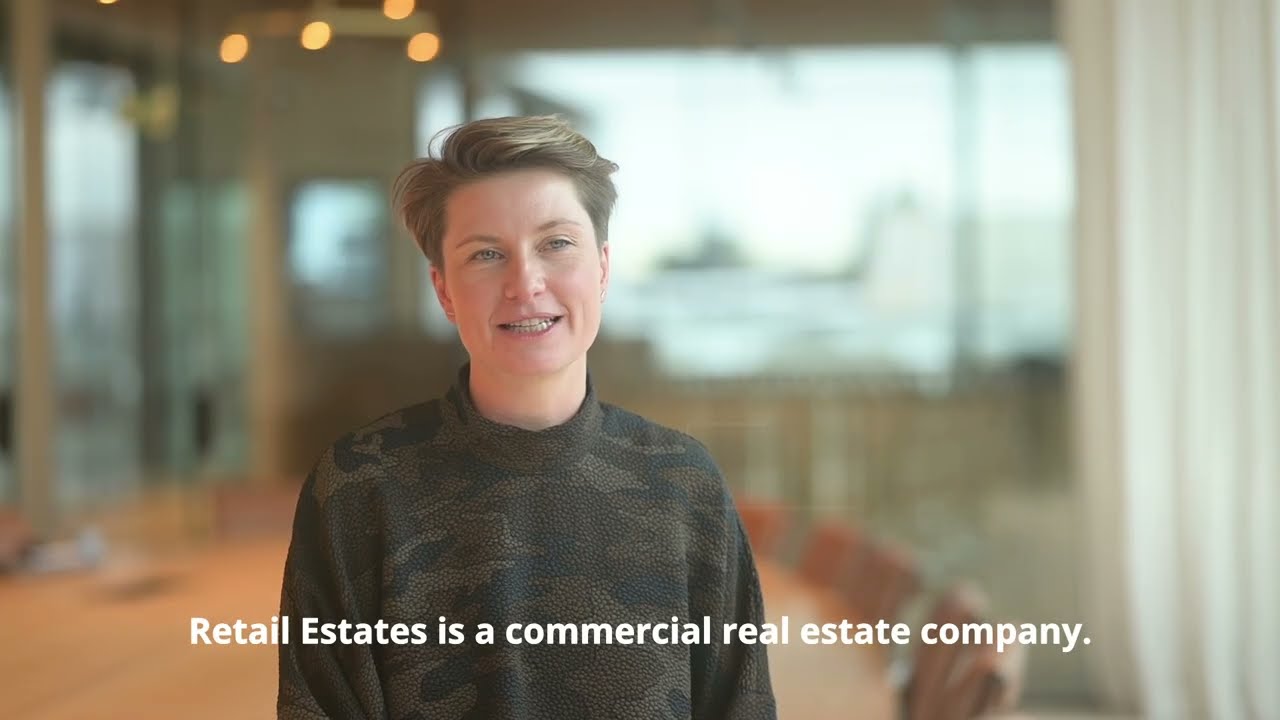
Retail Estates: With independent expert advice to a future-proof and sustainable real estate portfolio
The challenge
Retail Estates is a listed real estate investor with a portfolio of over 2 billion euros in large-scale retail properties in the Benelux. They want to develop a strategy focused on an integrated approach to making their portfolio sustainable and future-proof through building renovation and renewable energy, supported by digitalization, battery storage, and smart energy management to optimize self-consumption and ensure a future-proof investment trajectory in close cooperation with tenants.
The trajectory at EDIH-EBE
EDIH-EBE brought together a multidisciplinary expert panel with a clear goal: supporting Retail Estates in approaching sustainability as a single, integrated, and coherent story.
Instead of looking at isolated techniques, a broad, holistic approach was chosen. In the analysis, solar panels, HVAC, charging points, and battery systems were examined in mutual coherence. Following initial strategic input from the expert panel, a study is currently being conducted in which specific cases are further developed into concrete action plans through qualitative analyses.
Results and impact
The trajectory offered Retail Estates immediate, concrete input for measures they can already take.
- Practical insights: the experts offered not only an academic background, but also practical experience.
- Independence: the result is a completely independent vision of their complex real estate portfolio.
- Coherence: there is now a basis for a strategy that optimally integrates different technologies.
Expert Panel Retail Estates

Video
Success story #3: Collective knowledge sharing and strategic advice via Deep Dives
Within the consortium, we observed that there was still a barrier to taking the step towards a customized expert panel, but that there was a demand from companies for advice from experts to make the digital and sustainable transition. Therefore, a low-threshold alternative was sought where broad reach was the decisive factor. In the autumn of 2024, this led to the introduction of a proven EDIH-EBE concept: Deep Dives.
These deep dives address themes with a clear link to EDIH-EBE and regarding which a high degree of expertise is present within the consortium. For every deep dive, a physical or virtual demo linked to the topic is always provided, demonstrating which test facilities are available within the framework of EDIH-EBE.
In total, 9 well-attended collective expert panels were organized in 2025 where several participants also completed a DMA:
- Deep Dive: Integration of High Power Charging (HPC): Are we prepared for the change?
06/02/2025, EnergyVille, Thor Park - Genk - Deep Dive: Cybersecurity in energy systems: Are we ready for it?
13/02/2025, EnergyVille, Thor Park - Genk - Deep Dive: What can AI mean for energy management of buildings? 11/03/2025, HomeLab, Technologiepark - Gent
- Deep Dive: Digital transformation of energy assets
08/05/2025, EnergyVille, Thor Park - Genk - Deep Dive: Digital renovation of heating networks
27/05/2025, VITO - Berchem - Deep Dive: Electrification of the construction site
02/12/2025, Faculty of Industrial Engineering - Gent - Deep Dive: Digital solutions for PV in the built environment
03/12/2025, EnergyVille, Thor Park – Genk - Deep Dive: Advanced AI Applications in Energy: control, privacy, and forecasting
04/03/2026, Aula Wolfspoort, Leuven - Deep Dive: Batteries and fire safety
26/03/2026, Faculty of Industrial Engineering - Gent
Success story #4: Proof of concept to make product market-ready
Loxxer: How a scale-up enters the market with confidence thanks to independent testing
Who is Loxxer?
Loxxer is a young company (active for ±4 years) that develops and produces products for safely storing and charging lithium-ion batteries. Their range consists of various battery storage cabinets (large cabinet, small charging box, and locker cabinet), with ambitions to expand into both professional and residential markets (e.g., e-bikes).
Challenge
The market in which Loxxer operates does not yet have a clear legal or European framework. However, there is a German industry standard (VDMA) that will presumably form the basis for future European standards. Loxxer wanted to test their own products to verify whether they comply with that German standard. Extensive safety testing is expensive, complex, and difficult to access. Nevertheless, it is crucial for product safety, product development, and gaining customer trust.
Why EDIH-EBE?
Loxxer was looking for an affordable and reliable partner willing to test their products, and able to provide high-quality reporting. Through VITO, they reached EDIH-EBE. The financial and administrative threshold was significantly lowered, says Renée Pillen, co-founder at Loxxer: “Without that subsidy and support, we simply would not have done these tests. For us as a small scale-up, that was financially not feasible.”
The trajectory at EDIH-EBE
The trajectory started with an introductory meeting with the EDIH-EBE experts. During this meeting, they could present their products and explain where they could use help.
Afterwards, the EDIH-EBE experts got to work. They translated the existing German standards into a suitable testing method. Subsequently, practical tests were conducted on Loxxer's small charging box.
In total, three units were tested. The result of these tests was poured into an extensive technical report with data, graphs, and other visual material. This gave them a clear view of what did and did not work optimally. These were not off-the-shelf solutions, but clear insights with which they could get to work in their further product development.
EDIH-EBE as a bridge to professional, independent expertise
Loxxer described the EDIH-EBE experts as accessible, professional, and enthusiastic: “We finally found a partner who was willing to perform the tests and actually thought along with us. That info is enormously valuable for our further product development.”
The reports from their trajectory are of high quality and saved them a lot of time. EDIH-EBE took on the largest share of the work, such as organizing the tests and follow-up. Their own investment of time was minimal compared to the result.
Why do they recommend this trajectory?
The EDIH-EBE trajectory makes professional product testing accessible to SMEs and scale-ups that would otherwise find it hard to finance. Loxxer indicated that without the subsidy they could never have performed these tests. The result of their trajectory was a win-win. They gained important and well-substantiated insights for their further product development. At the same time, the end-user gets a better product with proven safety. “Thanks to the tests, we can enter the market with peace of mind. You sell your product in a completely different way when you know it has truly been tested,” says Renée.
Conclusion
Thanks to the trajectory, Loxxer was able to accelerate its product development, reduce risks, and enter the market with more confidence. The project acted as a real proof of concept and laid the foundation for future certification and further growth.
Loxxer


